Table of Contents
Yoga offers numerous standing poses that build strength, stability, and focus. Among them, Virabhadrasana, commonly known as the Warrior Pose, stands out for its ability to improve posture, balance, and confidence. Practicing this pose regularly can benefit both your body and mind, making it a staple in any yoga sequence.
What is Virabhadrasana in Yoga?
Virabhadrasana is derived from Sanskrit, where “Virabhadra” refers to a mythological warrior, and “asana” means pose. This yoga posture embodies strength, focus, and readiness, mirroring the qualities of a warrior. It is a standing yoga pose that engages the legs, core, and arms, while encouraging proper breathing and mindfulness.
Why it is Called “Warrior Pose”
The name “Warrior Pose” comes from the legend of Virabhadra, a powerful warrior created to restore order. Just as the warrior embodies courage and determination, holding this pose in yoga encourages mental resilience, groundedness, and inner strength.
Types of Virabhadrasana
There are three primary forms of Virabhadrasana:
- Virabhadrasana I (Warrior I): Focuses on hip opening, chest expansion, and arm stretch while keeping one foot forward.
- Virabhadrasana II (Warrior II): Emphasizes leg strength, endurance, and lateral stretching of hips. Arms are extended sideways at shoulder height.
- Virabhadrasana III (Warrior III): A balancing posture that strengthens the legs, core, and improves concentration, where the body is almost parallel to the ground.
Each type offers unique benefits and challenges, making them suitable for Virabhadrasana for beginners as well as advanced practitioners.
How to Do Virabhadrasana (Step-by-Step Instructions)
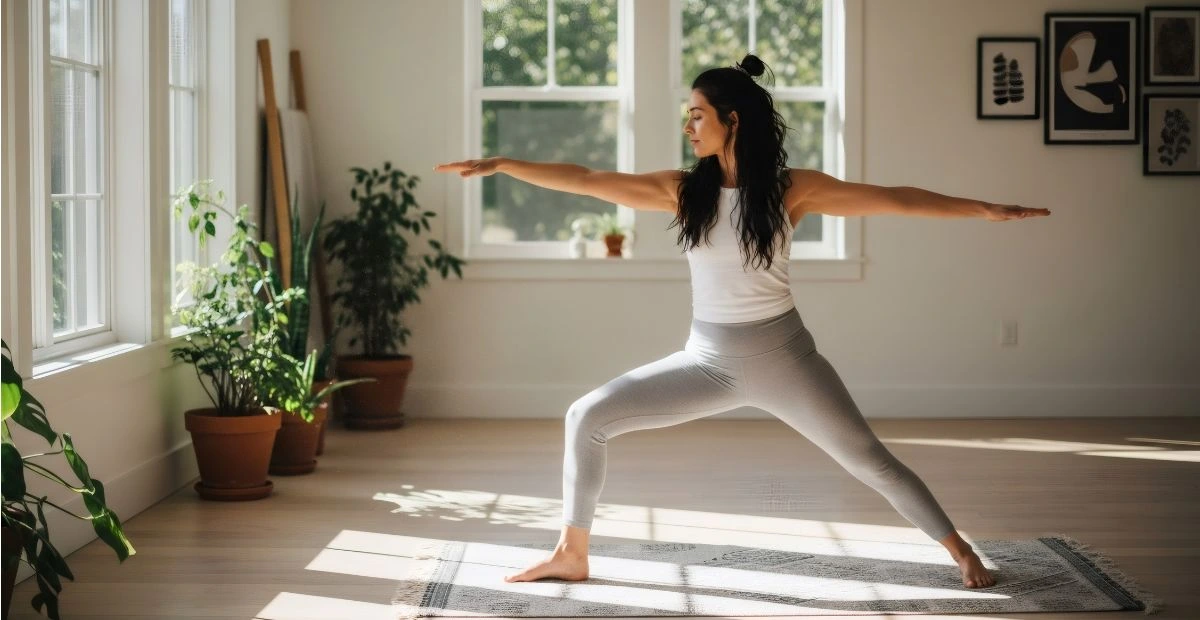
Correct alignment is crucial to reap the full benefits of the pose. Focus on steady breathing and controlled movements.
Step-by-Step Guide for Virabhadrasana I
- Start in Tadasana (Mountain Pose). Step one foot back, keeping the front knee bent at 90 degrees.
- Square your hips forward and raise your arms overhead, palms facing each other.
- Keep the spine elongated and chest open.
- Hold the pose for 30–60 seconds while breathing deeply.
- Repeat on the other side.
Tips: Keep your back heel grounded, avoid collapsing your lower back, and engage your core muscles.
Step-by-Step Guide for Virabhadrasana II
- Begin in a wide-legged stance, front foot facing forward, back foot slightly turned in.
- Bend the front knee at 90 degrees, keeping the knee over the ankle.
- Extend your arms out to the sides, parallel to the floor, palms down.
- Gaze over the front hand while grounding the back foot.
- Hold for 30–60 seconds, then switch sides.
Tips: Ensure the front knee does not extend beyond the ankle and maintain even weight distribution between both legs.
Step-by-Step Guide for Virabhadrasana III
- From Tadasana, step one foot back slightly and hinge forward from the hips.
- Lift the back leg parallel to the floor while extending your arms forward or to the sides for balance.
- Keep your torso and lifted leg in one straight line.
- Engage the core and maintain balance for 20–40 seconds.
- Switch sides and repeat.
Tips: Keep the standing leg firm and avoid rounding the back. Use a wall for support if needed.
Breathing Techniques While Performing
- Inhale while extending arms and lifting the chest.
- Exhale as you bend the front knee or hinge forward.
- Maintain smooth, steady breaths to stabilize the pose and improve endurance.
- Coordinating breath with movement enhances mindfulness and reduces strain.
Benefits of Practicing Virabhadrasana
Physical Benefits:
- Strengthens legs, thighs, and ankles
- Improves balance and coordination
- Opens hips and shoulders
- Enhances stamina and posture
Mental Benefits:
- Builds focus and concentration
- Encourages confidence and inner strength
- Reduces stress through mindful engagement
Health Benefits:
- Promotes better blood circulation
- Supports flexibility and mobility in hips and legs
- Helps relieve tension in the back and shoulders
Common Mistakes to Avoid in Virabhadrasana
- Allowing the front knee to extend beyond the ankle
- Collapsing the chest or rounding the spine
- Lifting the back heel off the floor in Virabhadrasana I & II
- Leaning too far forward in Virabhadrasana III
- Holding the breath instead of breathing deeply
Precautions & Contraindications
- Avoid Virabhadrasana if you have severe knee, hip, or shoulder injuries.
- Pregnant women should perform modified versions, focusing on balance and support.
- Those with high blood pressure or vertigo should practice under supervision.
Safety Tips for Beginners
- Use props like yoga blocks or a wall for stability.
- Practice slowly and focus on alignment.
- Hold the pose for shorter durations initially.
- Gradually increase intensity as strength and flexibility improve.
Virabhadrasana Variations & Modifications
- Shorter Stance: Reduce the distance between feet to lessen strain on knees and hips.
- Chair Support: Place a chair behind for support in balancing poses.
- Arm Variations: Hands on hips or in prayer position for shoulder relief.
- Combined Flows: Link Warrior poses with lunges and side stretches for dynamic sequences.
Virabhadrasana in Daily Yoga Practice
- Include Virabhadrasana I, II, and III in standing sequences.
- Follow with hip openers and forward bends for balance.
- Repeat on both sides to ensure symmetry.
- Practice 3–5 minutes daily for strength, flexibility, and mindfulness.
Conclusion
Virabhadrasana (Warrior Pose) is a versatile standing yoga pose that strengthens the body, enhances balance, and builds mental focus. Regular practice, proper alignment, and mindful breathing make it an essential pose in any yoga routine. Whether you are a beginner or an experienced yogi, incorporating Warrior poses can transform both your physical and mental well-being, empowering you like the warrior it is named after.
FAQs – Virabhadrasana (Warrior Pose)
What is Virabhadrasana in yoga?
Virabhadrasana, or Warrior Pose, is a standing yoga posture that strengthens the legs, core, and arms, while improving balance, flexibility, and mental focus. It symbolizes courage and determination, inspired by the warrior Virabhadra from Sanskrit mythology.
How many types of Virabhadrasana are there?
There are three main types:
- Virabhadrasana I: Focuses on hip opening and arm stretch while keeping one foot forward.
- Virabhadrasana II: Strengthens the legs and opens hips laterally with arms extended sideways.
- Virabhadrasana III: A balancing posture that improves core strength and concentration.
How do you do Virabhadrasana I?
Step one foot back, bend the front knee, square your hips forward, and raise your arms overhead. Keep your back heel grounded and chest lifted. Hold for 30–60 seconds, then switch sides. Focus on deep, even breathing.
How do you do Virabhadrasana II?
Stand with a wide stance, bend the front knee at 90 degrees, extend arms sideways at shoulder height, and gaze over the front hand. Keep the back foot grounded and hips aligned. Hold for 30–60 seconds, then repeat on the other side.
How do you do Virabhadrasana III?
From a standing position, hinge forward from the hips, lift the back leg parallel to the floor, and extend arms forward or sideways. Keep your torso and raised leg in one straight line, engage the core, and balance for 20–40 seconds. Switch sides.
Can beginners do Virabhadrasana?
Yes, beginners can start with shorter stances, use props like yoga blocks or a wall, and practice for shorter durations. Gradually increase the hold time as strength and flexibility improve.
What are common mistakes to avoid?
Avoid letting the front knee extend beyond the ankle, collapsing the chest, rounding the spine, or holding your breath. Proper alignment and steady breathing are crucial.
Who should avoid Virabhadrasana?
People with severe knee, hip, or shoulder injuries, high blood pressure, vertigo, or those who are pregnant should perform modified versions or consult a yoga instructor before attempting the pose.
How can I include Virabhadrasana in my daily yoga sequence?
Incorporate Virabhadrasana I, II, and III into your standing pose routine. Follow with hip openers, lunges, and forward bends. Practice 3–5 minutes daily for strength, flexibility, and mindfulness.
Can Virabhadrasana help with mental focus?
Yes, holding the pose while focusing on alignment and breath improves concentration, encourages mental clarity, and builds inner resilience, reflecting the warrior’s mindset.